How to Tell If You Have Termites Before the Damage Gets Worse
Termites cause billions of dollars in property damage across the United States every year, and Georgia’s warm, humid climate puts homeowners in Athens and Northeast Georgia at especially high risk. The problem is that termites work out of sight. By the time you notice something is off, a colony may have been feeding on your home’s structure for months or even years.
Knowing the early signs of termite infestation can help you catch a problem before it turns into a costly repair. Below are seven termite warning signs to watch for, what they look like, and what to do if you spot them.
1. Mud Tubes on Your Foundation
Mud tubes are one of the most recognizable signs of a termite infestation. These pencil-width tunnels are built by subterranean termites to travel between their underground colony and the wood they’re feeding on. The tubes protect them from open air and predators while keeping moisture levels stable.
You’ll typically find them running vertically along foundation walls, piers, crawl space supports, or along the inside of exterior walls. In Georgia, where subterranean termites are the most common species, mud tubes are a strong indicator that a colony has direct access to your home.
2. Discarded Wings Near Windows and Doors
Termite swarmers are the reproductive members of a colony. When a colony matures, it releases hundreds of winged alates that fly out to pair up and start new colonies. After landing, they shed their wings almost immediately.
If you find small piles of translucent, equal-length wings on windowsills, near exterior doors, or around light fixtures, that is a strong sign that a swarm originated nearby. In Georgia, swarm season typically runs from late February through May, with peak activity in March and April after warm rains.
3. Hollow-Sounding Wood
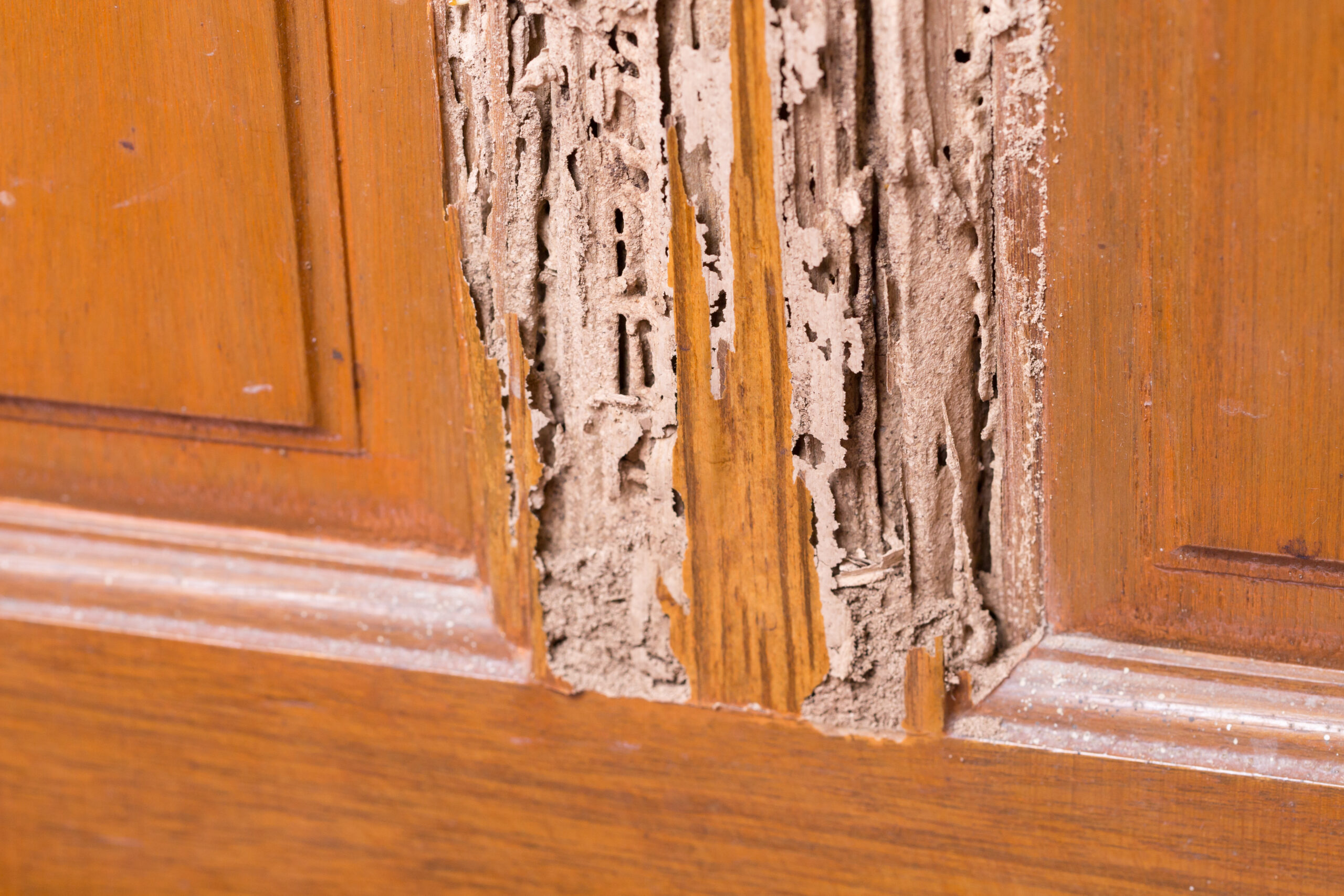
Termites eat wood from the inside out, leaving a thin outer shell that may look perfectly normal on the surface. One of the easiest ways to check is to knock or tap on baseboards, door frames, window trim, or exposed structural wood. If the sound is dull and hollow rather than solid, termites may have already consumed the interior.
Georgia’s high humidity accelerates this process because moisture softens wood fibers and makes them easier for termites to break down. Homes with crawl spaces or older construction are particularly vulnerable.
4. Frass (Termite Droppings)
Frass is a term for the small, pellet-shaped droppings that drywood termites push out of their galleries as they feed. These tiny granules are often found in small piles near baseboards, on window ledges, or beneath wooden furniture.
While subterranean termites are more common in Georgia, drywood termites do appear in the state, especially in older homes with untreated wood. If you spot what looks like fine sawdust or sand-colored pellets near wood surfaces, don’t sweep it away. Save a sample and contact a professional for identification.
5. Tight-Fitting Doors and Windows
Doors and windows that suddenly become difficult to open or close are easy to dismiss as a seasonal humidity issue. In some cases that’s true, but it can also be one of the more subtle termite warning signs homeowners overlook.
As termites eat through the wood framing around doors and windows, the structural shape shifts. This warping creates uneven gaps, sticking points, and frames that no longer sit square. If the problem appears in multiple spots around your home, or if it shows up alongside any of the other signs on this list, a termite inspection is a smart next step.
6. Damaged or Crumbling Wood Grain
When you pull back trim, inspect a crawl space beam, or probe exposed wood and notice that the grain crumbles easily or separates in layered sheets, that pattern is consistent with termite feeding. Subterranean termites eat along the soft grain of the wood while leaving the harder layers behind, which creates a distinctive honeycomb or layered texture.
This type of damage is often found in floor joists, sill plates, and framing members that sit close to soil. In Georgia homes with pier-and-beam or crawl space foundations, these areas are among the first places termites will target.
7. Bubbling or Peeling Paint
Paint that bubbles, blisters, or peels away from wood surfaces without an obvious water source can signal termite activity beneath the surface. As termites feed through the wood and produce moisture as a byproduct, it pushes against the paint layer and causes visible distortion.
This sign is easy to confuse with water damage, which is another reason professional identification matters. If you notice bubbling paint on exterior trim, siding, or interior walls near the foundation line, it’s worth having an expert take a closer look.
What to Do If You Spot Any of These Signs
If you recognize even one of these termite warning signs in your home, the most important thing is to act quickly. Termites don’t stop feeding on their own, and the longer a colony goes undetected, the more expensive the repairs become.
Don’t rely on DIY sprays or store-bought treatments. These products won’t reach the colony and can make it harder for a technician to trace the source of the activity.
Instead, schedule a professional termite inspection with Pete’s Pest Patrol. Our certified technicians will assess your property, identify the type and extent of the activity, and recommend a targeted termite treatment plan based on what we find. We offer free inspections, and every termite bond comes with a repair warranty and price-locked annual premium.
Whether you’ve seen signs of termite infestation or simply want the peace of mind that comes with knowing your home is protected, we’re here to help.


